
Finding Aiken Resident Records
No official roster identifies every person who lives in Aiken. The useful route depends on the task. A parcel report can connect a recorded owner to land. A deed index can document parties to a transaction. A court or Probate index can supply a case lead, and a dated directory can show a period listing. Those are distinct facts, so keep the date and source role beside every result.
Start with the most specific fact already known, such as a full name, street address, parcel number, case number, or a directory year. Do not turn a property owner field into an occupancy claim. Do not treat a blank result as proof of absence. Cutoff years, alternate spellings, protected fields, and record types held at the counter can all affect what appears online.
- Use the County property search when the question concerns a parcel, owner, or situs address.
- Match the parcel or legal description to the Register of Deeds index for recorded land parties.
- Use the appropriate court or Probate index only for a case or estate lead.
- Check dated Museum, library, or archive holdings for a historical household trail.
- Ask the custodian, library, or archives for the next route when an online index ends.
Aiken Residents Records Offices
Aiken is the Aiken County seat, so several county routes are close together but serve different functions. The Aiken County Register of Deeds keeps recorded land documents. The Assessor supplies the property-account starting point, and the elections office handles voter services. For address work, the detailed Aiken street directory route explains how the parcel and deed trail fit together.
Voter Registration & Elections
1930 University Parkway, Suite 1200
Aiken, SC 29801
803-642-2028
Each office can confirm only the record in its custody. The Clerk keeps official court files, Probate keeps estate and marriage-license records, and the archive route holds many historical series. That division is important when a search result provides a number or index entry but not a certifiable copy.
Aiken Parcel Search Paths
The County Beacon instructions document four property-search starting points: Owner Name, Address, Parcel Number, and Legal Description. A result opens a Report, and its Map link moves the search to the mapped parcel. The same instructions identify road, address, subdivision, and parcel GIS searches, which are useful for checking the geography before connecting a name to land.
| Property-search field | Best starting fact | What the route supports |
|---|---|---|
| Owner Name | Recorded owner name | Property-account lead |
| Address | Known situs address | Parcel report and map |
| Parcel Number | County parcel identifier | Specific tax-parcel navigation |
| Legal Description | Land description from a deed | Cross-check across land records |
The report is a land-record tool. A situs address identifies the property, while any displayed mailing address is tax correspondence. Neither field alone proves the present household.
Aiken Deed Index Cutoffs
The ROD office says its records reach 1872, while the online index begins in 1982. In the web tool, users can search by name or business or by book and page. Name mode has a required last-name or business field and optional first name, document type, and beginning or ending date controls. Book/page mode has required numeric book and page fields.
The Register of Deeds office page identifies the land-document route and its public access role.
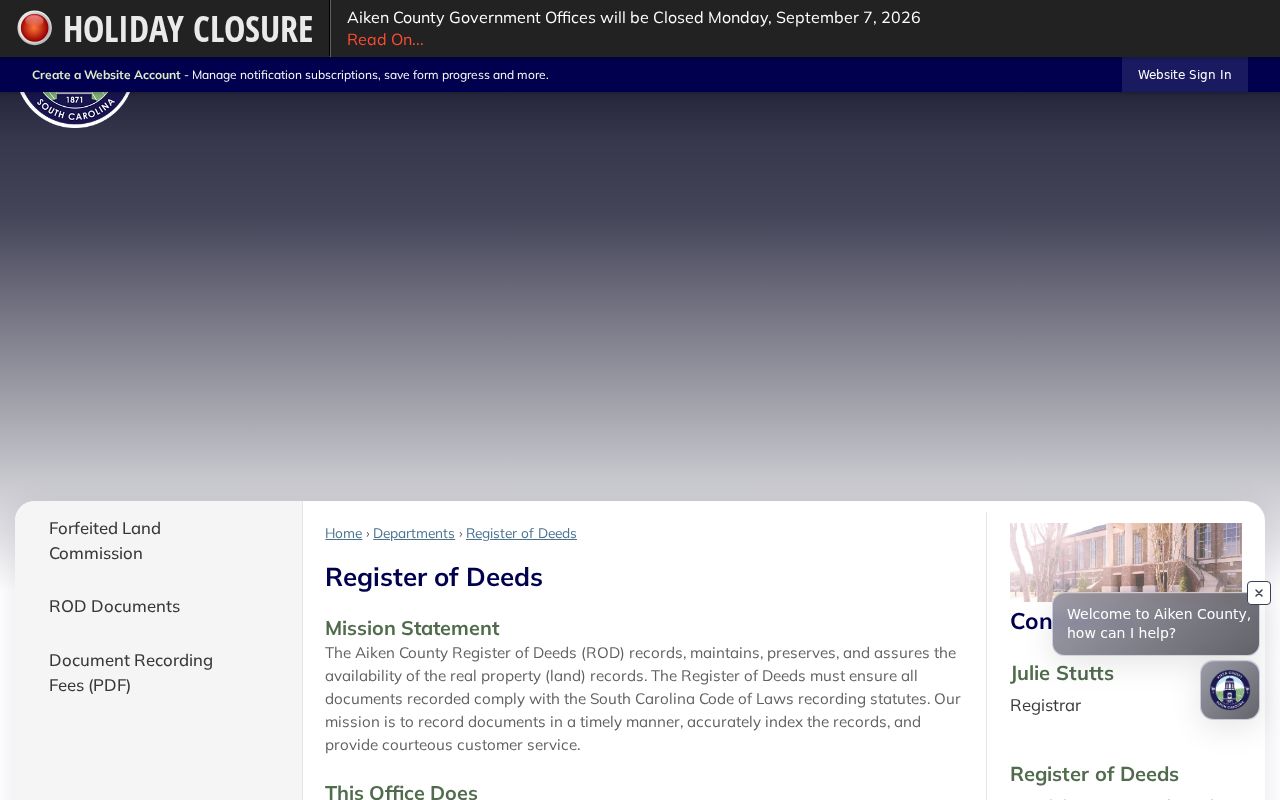
The office route is necessary for records beyond the web index, records in book form, and a request for an official copy.
The results grid identifies Image, Record, last and first name, record date, file type, book or page, and property description. That makes it a precise navigation tool rather than a modern address directory. Documents after June 12, 2005 are electronically imaged on ROD-office computers; earlier records are in book form. A written copy request with $5 is a documented alternative to a visit.
The ROD Documents search form shows the two available search paths.
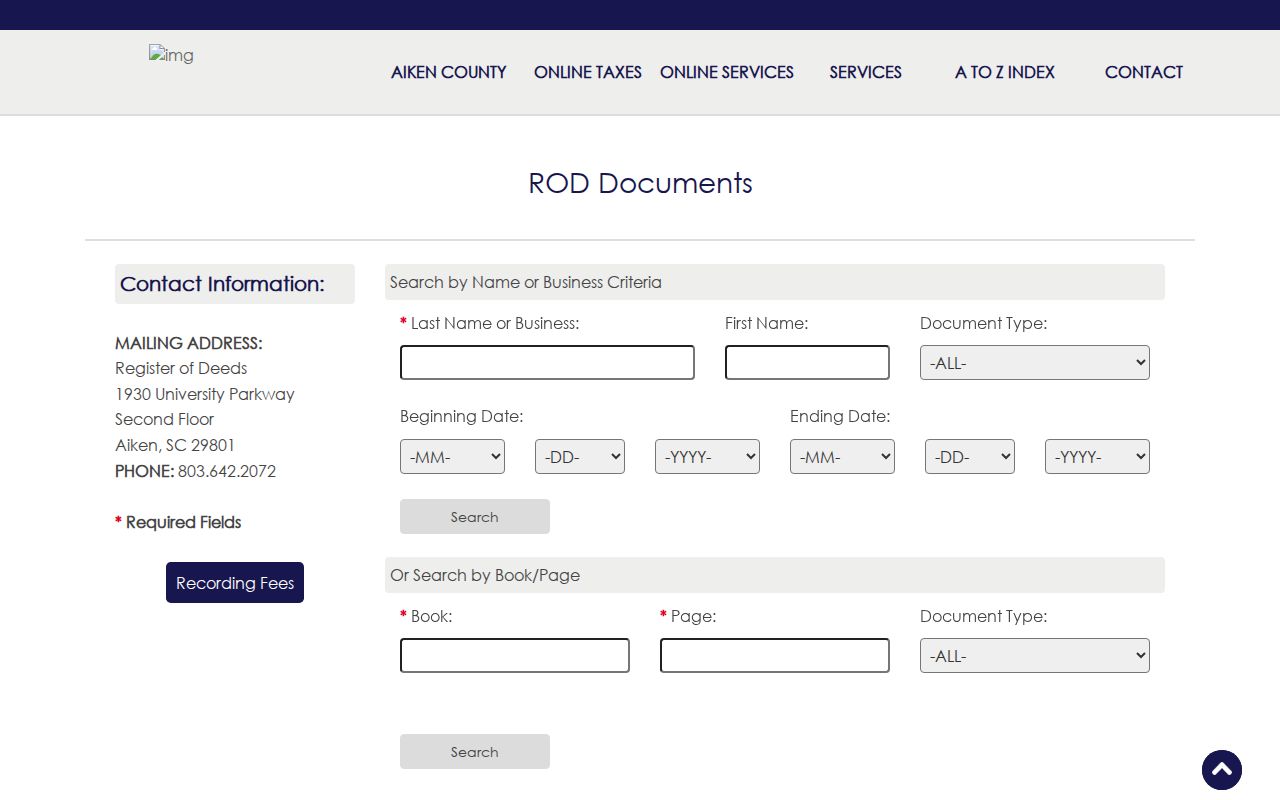
Its fields make clear that the index is party and book/page oriented, not a direct current-address directory.
Note: Confirm a party, date, book and property description together before treating an index hit as part of the same land chain.
Current Aiken Resident Directories
Today’s Aiken directories are purpose-built lists, not one public census of all households. A property account names an owner of record. MyscVOTES lets an individual check a personal registration record. The ROD names recorded parties. Court and Probate systems point to a proceeding. Keeping those roles separate makes a residents directory search more accurate and more respectful of privacy.
| Source | What it can identify | Custodian | Access route |
|---|---|---|---|
| Property account | Owner associated with a parcel | Aiken County Assessor | Property portal and counter |
| ROD index | Recorded land parties | Register of Deeds | Web index, office books, written request |
| Voter self-check | A voter’s own registration | SC Election Commission | Name, county, and date of birth |
| Court Public Index | Party and case-index lead | Judicial Branch | Public index, then Clerk |
| Probate search | Decedent and case number | Probate Court | Index, then custodian file |
When the goal is one verified person rather than a record type, use the distinct steps in the Aiken resident lookup workflow. It pairs dated sources instead of relying on one similar name.
Aiken Voter Access Rules
The state’s MyscVOTES check requires name, county, and date of birth as printed on the voter card. It is a personal verification route, not a public by-street browser. The separate official voter-list channel is for qualified registered South Carolina voters, with criteria such as county, voting district, age, sex, race, household, registration date, and election participation.
South Carolina law prohibits knowingly obtaining or using personal information from public records for commercial solicitation. The state also permits a voter to request inactive status, which removes that record from active voter lists and online lookup. A non-match therefore does not settle where a person lives.
The MyscVOTES registration guidance documents the personal-check inputs and voter service routes.
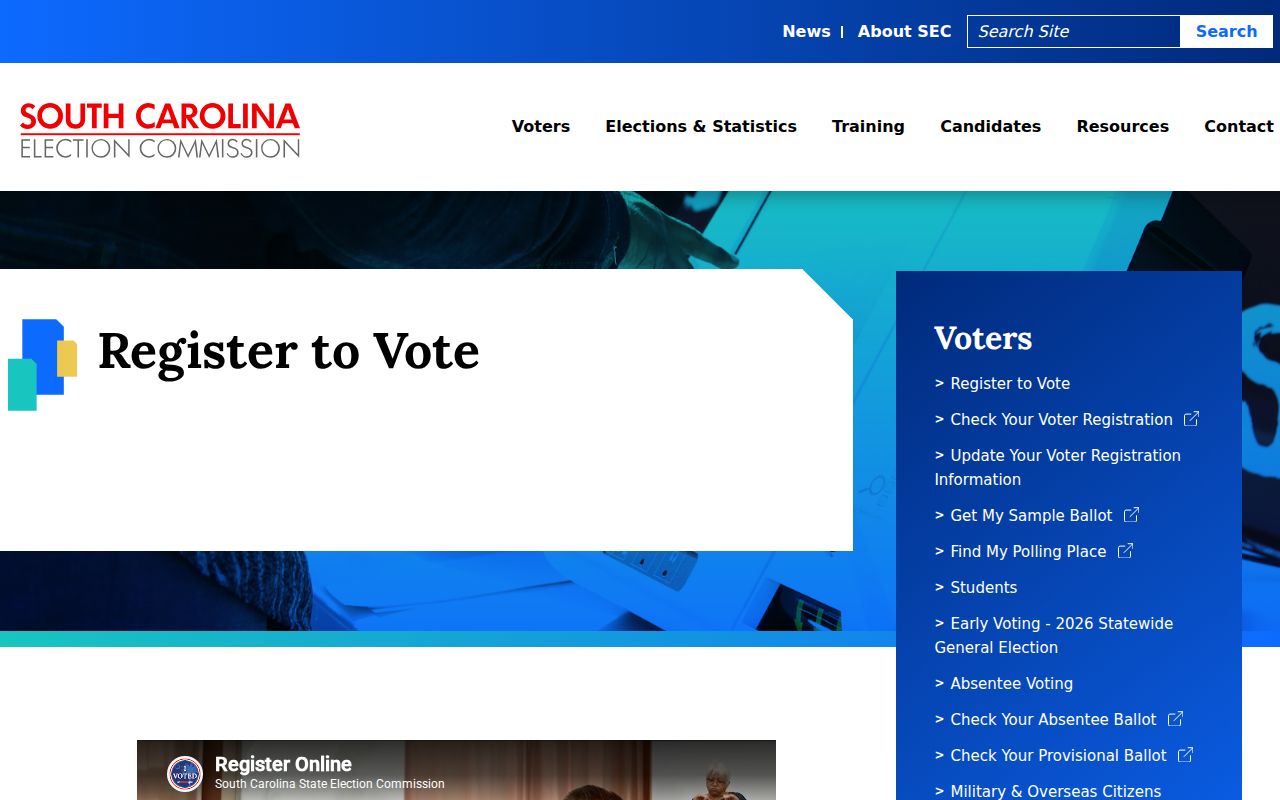
The state guidance reinforces that the tool is for a voter’s own record, not a method for compiling an Aiken household list.
Aiken Court and Probate Leads
The South Carolina Judicial Branch directs Aiken searches through its county case-records route. A public-index result can provide a case number, party name, filing date, court, or status, but it is not the official court file. Beginning January 1, 2026, home addresses were removed from the public court index. Use the number to contact the Clerk of Court for the custodian record.
For an estate question, the state Probate search can return a decedent name and case number. Aiken Probate holds original estate files from 1904 forward. For 1873 through 1903, original estate papers are at the South Carolina Department of Archives and History, while Probate has public-viewing microfilm. This time split is a useful Aiken research check.
Aiken Current Custody Search
The Aiken County Detention Center search has a limited purpose. It covers people currently detained, not a historical arrest file or a residence record. The form requires a last name and offers optional first-name, sex, and race controls. Its own warning says information can change, may contain errors, and an arrest is not a conviction.
The Detention Center public search displays those narrow field choices and its caution.
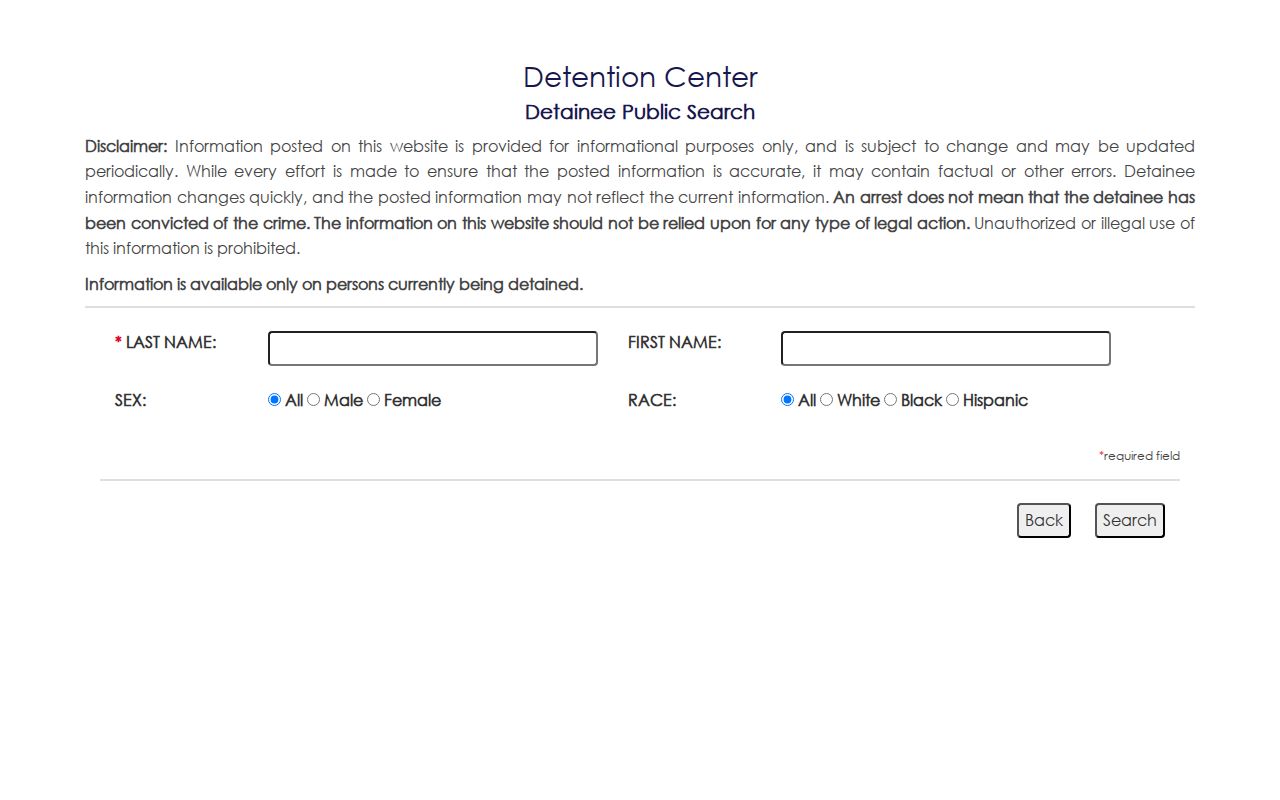
For an earlier or official file, contact the responsible court, Clerk, or law-enforcement custodian and expect applicable public-records exemptions or redactions.
Aiken Records Search Terms
Records use short labels that can sound more certain than they are. Reading the labels by their actual role helps prevent a parcel, index, or directory entry from being mistaken for proof of residency.
- Parcel
- A county-identified unit of land used in assessment and map work.
- Situs address
- The location of land or a building, which can differ from a tax mailing address.
- Index
- A finding aid that points to a record; it is not automatically the underlying certified record.
- Criss-cross directory
- A historical reverse-style directory arranged by address rather than only by name.
A legal description and book/page reference often stay more stable than an old street label. Use both when moving from a parcel report to a recorded instrument.
Aiken County Archive Layers
The South Carolina Department of Archives and History Aiken County guide inventories conveyances, tax rolls, estate papers, voter records, court records, and other historical series. It is an inventory and research route, not a promise that every item is online. The guide is especially valuable once an online ROD search reaches its date boundary.
County creation also matters. Aiken County was created in 1871 from parts of Orangeburg, Edgefield, Barnwell, and Lexington Counties. A person, parcel, or dispute before that change may need a parent-county office or court. Starting in the correct jurisdiction can save a long search in the wrong book.
The South Carolina Archives Aiken County records guide is shown below as the starting point for this older-record route.
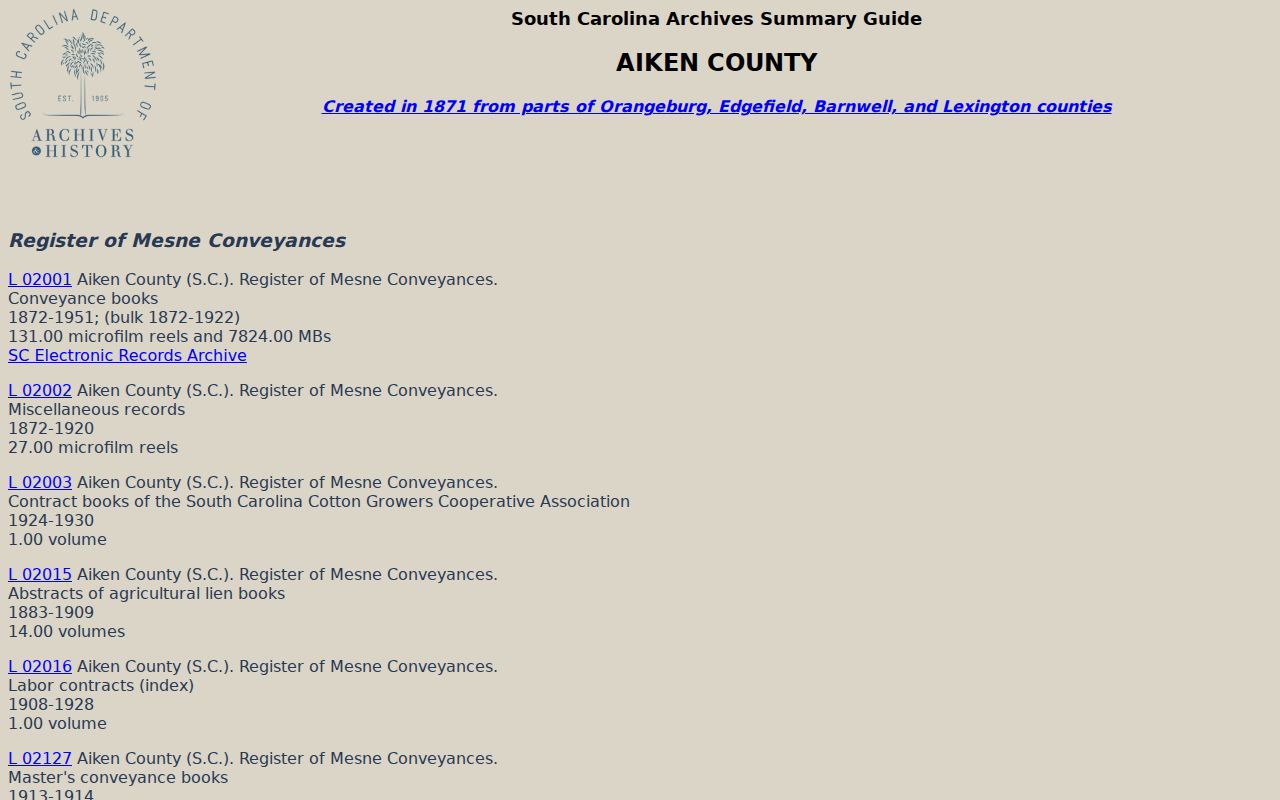
The guide supports a source-by-source request for reels, books, or files rather than an assumption that a historical name search is complete online.
Aiken Historical Directory Evidence
The Aiken County Historical Museum catalogue documents local city-directory holdings for 1956, 1960, and 1966, plus phone-book holdings from 1982 through 2017 with noted gaps and duplicates. Those volumes can place a listed name, address, or phone within a publication year. They do not form an unbroken roster or establish a present address.
SCDAH adds a City of Aiken census from 1868 and municipal series such as licenses, permits, tax material, water registers, and sewer applications. Each series identifies a historical relationship such as applicant, payer, license holder, or taxpayer. The detailed collections and entry-reading methods belong on the Aiken city directory page.
Aiken Address Evidence Limits
An address trail should move from a postal format or parcel to the record that actually supports the next fact. GeoServices maintains county GIS and 911 addressing outside incorporated North Augusta. Its office is the safer route for an official addressing discrepancy than an old directory label. City permit access is narrower: the Click2Gov screen accepts an application year and application number, not an address or owner browse.
That distinction prevents a common mistake. A permit payment or inspection screen does not name every person at an address. A focused request to the City custodian can be appropriate when a record type, time range, and known application number are supplied.
Aiken Public Record Requests
When an online search stops, the South Carolina Freedom of Information Act provides an inspection, copy, or electronic-transmission path for nonexempt records. A focused request names the office, record type, dates, address, parcel, case number, and preferred delivery. The law permits actual search, retrieval, and redaction costs at the lowest-paid-qualified-employee rate and allows a deposit of up to 25 percent of the estimated cost.
Aiken County’s FOIA form goes to the County Administrator’s Office at 1930 University Parkway, Suite 3100, or foiarequests@aikencountysc.gov. The published local schedule lists $17.41 per hour for research, search, retrieval, or redaction. Courts and other elected offices may use their own schedule, so route a request to the actual custodian.
Aiken Record Dates Matter
Dates determine more than the search box. The Register of Deeds web index begins in 1982, but office records reach 1872. Aiken Probate holds original estate files from 1904 forward, while the South Carolina Department of Archives and History keeps originals for the 1873 through 1903 period. The Historical Museum’s documented directory holdings are specific years, not a continuous run. A result should therefore carry its date and its source type from the start.
Older city evidence follows still another route. The State Archives inventory includes a City of Aiken census from 1868, municipal court dockets beginning in 1839, City Council material, license books, building-permit volumes, water registers, and sewer applications. Those records can support an historical name or address question in their own period. A water applicant, license holder, or taxpayer is not necessarily the same as every person who occupied an address.
This Aiken division of records is practical, not just historical. A name search that ends in one modern portal can continue through the appropriate counter, library microfilm reader, Museum catalogue, or archive inventory when its period and record type are known.
Aiken Vital Record Routes
South Carolina Department of Public Health is the state custodian for vital records. The local Aiken County Health Department at 222 Beaufort Street NE is identified as a place to obtain birth and death certificate copies. Aiken Probate keeps marriage licenses, while the Clerk of Court keeps divorce decrees. The holding office changes with the event type, so an event date and county should be written down before making a request.
Birth records are publicly viewable after 100 years and death records after 50 years under South Carolina law. State marriage reports begin July 1, 1950, and divorce reports begin July 1, 1962. For a current certificate or a restricted record, DPH eligibility, identification, fee, and application rules control. For family research, an archive or custodian can explain the available historical route without treating a vital record as an open person-finding database.
The South Carolina DPH Vital Records hub brings together state forms, access rules, office routes, and historical record options.
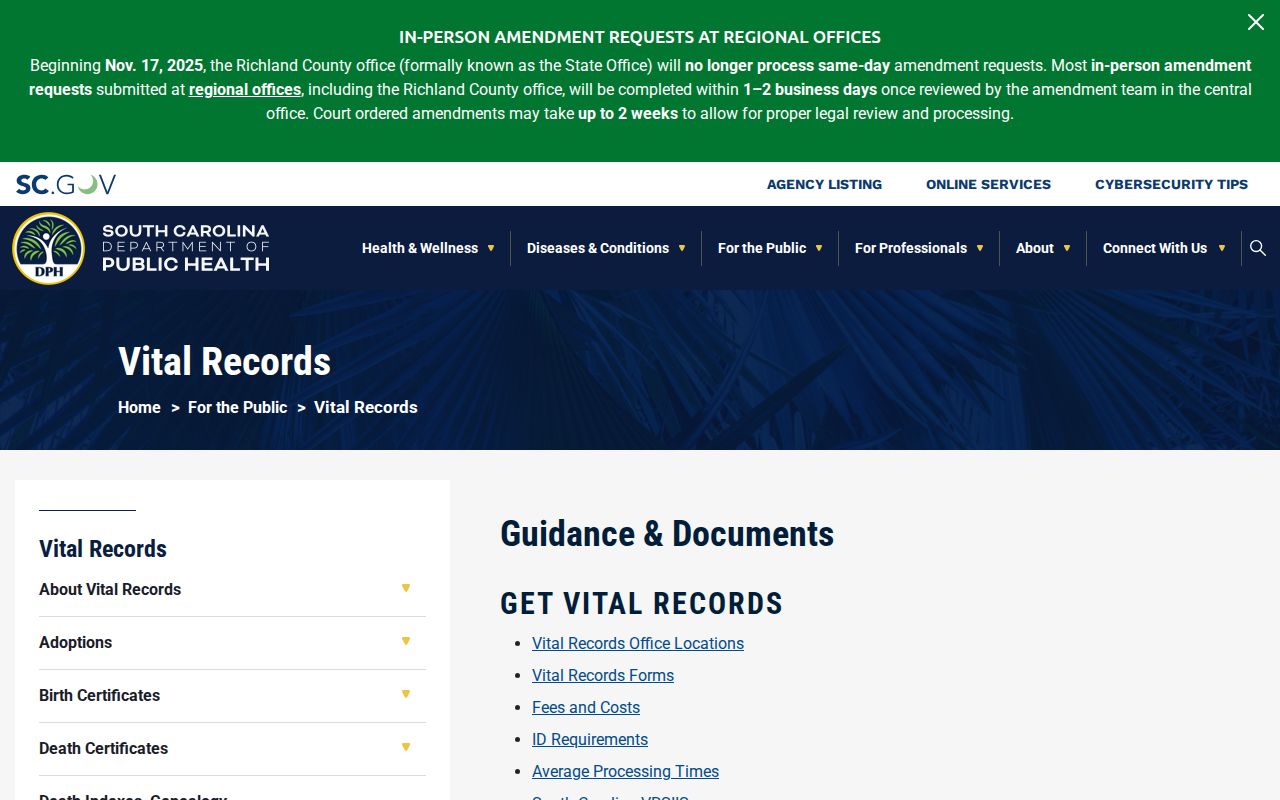
Choose the event-specific DPH, Probate, Clerk, local-health-department, or archive route before sending a request.
Aiken Official and Commercial Sources
Official sources and commercial people-finding products serve different purposes. A custodian index can identify a record, its date, and its legal role. A commercial compilation may combine public, consumer, and marketing data, which can lag behind source changes or join people with similar names. Neither category replaces checking the date, document type, and custodian.
| Source type | Useful strength | Important limit |
|---|---|---|
| Official custodian record | Defined record and access route | May be limited by coverage, privacy, or a counter-only file |
| Commercial compilation | May provide a lead to verify | May be old, incomplete, or combine same-name people |
Use the source that holds the record to correct an error. The Attorney General’s Address Confidentiality Program and the 2026 judicial and law-enforcement privacy process can also limit what government websites display.
Aiken Residents Privacy Boundaries
Public access has limits. South Carolina’s Address Confidentiality Program provides a substitute address for qualifying victims of domestic violence, human trafficking, stalking, harassment, or sexual offenses. Qualifying judges and certified law-enforcement officers can use the state’s personal privacy protection request process that became effective in 2026. Do not try to reconstruct information that a custodian has suppressed.
The South Carolina unclaimed-property program offers another limited name-search route. It identifies a possible claim, not a current address or proof of identity. The image below shows the state program’s official starting point.
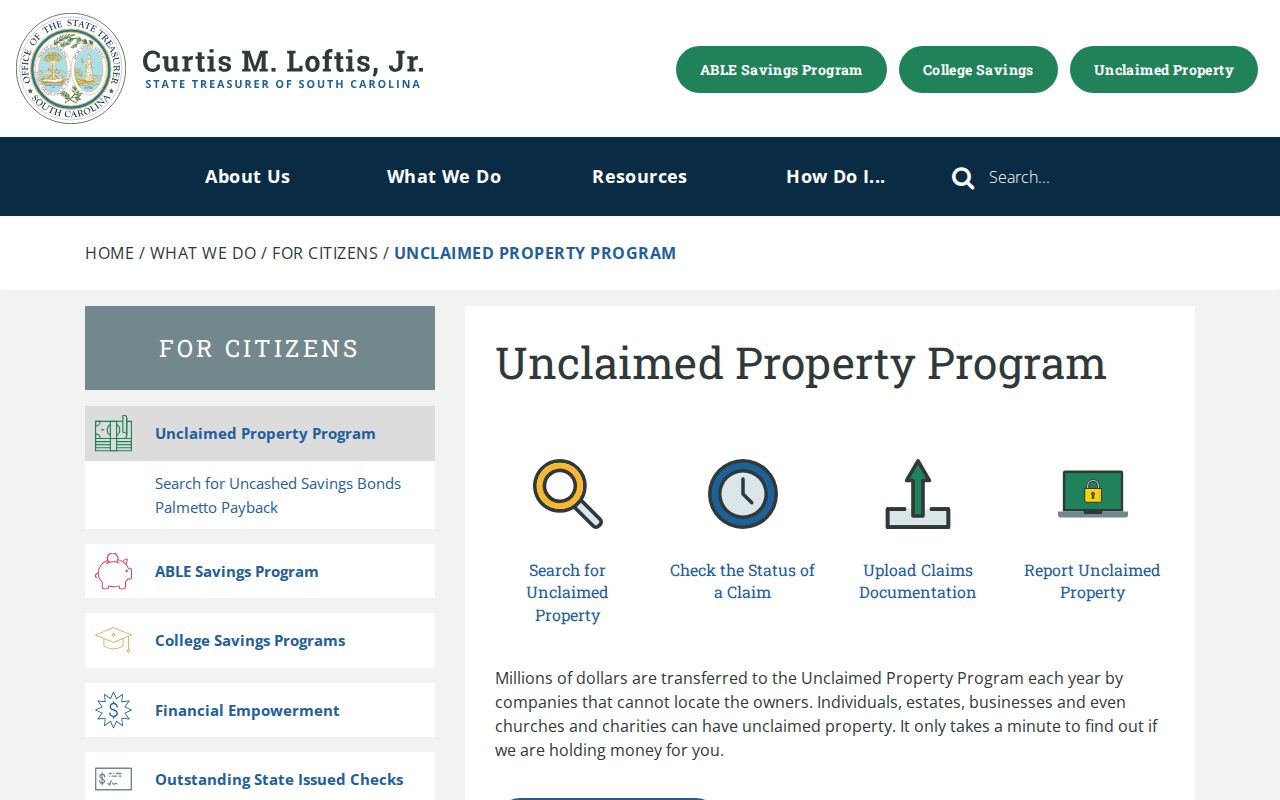
A claimant must use the state’s claim process and supporting documentation, which keeps the search tied to the responsible agency.